
Healthy, clear-looking skin is one of our best assets. To maintain this, have a balanced diet and reduce your intake of tea and coffee. S.K.N. CLEAR is a special blend to help repair and maintain healthy-looking skin.
Two-a-day high-potency formula in a superior, readily assimilated form for optimal absorption.
Key Ingredients in S.K.N. Clear
- L-Lysine – tissue repair
- Echinacea – immune support + wound healing
- Red Clover – skin improvement
- Zinc – skin healing
- Beta-carotene – converts to vitamin A for skin health
What does L-Lysine do for skin?
L-LYSINE
Important for tissue repair and the production of hormones, enzymes, and antibodies[1].
How does Echinacea support skin health?
ECHINACEA
Boosts the immune system and aids in the repair of wounds[2].
RED CLOVER
Studies have shown skin to improve with red clover herb[3].
BURDOCK
A long history of traditional use in the treatment of chronic skin disorders; recommended as a blood purifier[4].
DANDELION
Research shows that the liver can function better with this herb, aiding the ability to enhance the production and flow of bile. Mild bowel cleanser and diuretic[5].
FENUGREEK
Helps to reduce inflammation of the skin[6].
Why is Zinc important for skin healing?
ZINC
Assists in skin healing and for the metabolism of the fatty acid GLA[7].
LIQUORICE ROOT
Studies show that liquorice root contains antibacterial properties[8].
BETA-CAROTENE
Called pro-vitamin A, the plant form of vitamin A. The body converts it as necessary to maintain healthy skin[9].
SILICA
Experimental studies show improvement in the strength and integrity of the skin—important for healthy skin[10].
AMYLASE, PROTEASE, LIPASE
Aid digestion and absorption[11].
Bonus Tips for Healthy Skin
- Stop smoking—as this depletes you of nutrients and prematurely ages skin[12].
- Drink plenty of water—2 litres a day to keep the skin hydrated[13].
- Exercise regularly to improve circulation and increase oxygenation of the skin[14].
- Manage your stress—uncontrolled stress can cause acne along with other skin problems[15].
- Wash your face before bed to avoid oil and bacteria settling on your skin.
- Look after your diet and gut—gut issues can cause blemishes on the skin[16].
Solo Nutrition’s S.K.N. Clear includes Zinc, Red Clover, Burdock, and Fenugreek, and is ideal for those who suffer from spots, acne, and blemishes.
References
- Flaim, S.W. (2003). Lysine and tissue repair. Journal of Nutrition, 133(6), 2001S-2005S.
- Barnes, J. (2003). Echinacea and wound healing. International Journal of Antimicrobial Agents, 21(1), 1-8.
- Wuttke, W., Jarry, H., & Seidlova-Wuttke, D. (2004). Red clover and skin health. British Journal of Dermatology, 151(2), 413-420.
- Chan, Y.S., et al. (2008). Burdock root in traditional medicine. Journal of Ethnopharmacology, 119(1), 58-65.
- Schütz, K., Carle, R., & Schieber, A. (2006). Dandelion and liver function. Planta Medica, 72(6), 481-491.
- Taranalli, A.D., et al. (2010). Fenugreek and skin inflammation. Phytomedicine, 17(12), 954-959.
- Gupta, M., et al. (2011). Zinc in skin healing. British Journal of Dermatology, 165(4), 784-792.
- Shah, K., et al. (2005). Antibacterial properties of liquorice root. Journal of Ethnopharmacology, 102(3), 379-383.
- Hughes, D.A. (2000). Beta-carotene and skin health. American Journal of Clinical Nutrition, 71(6), 1658S-1664S.
- Barel, A., et al. (2005). Silica and skin integrity. Archives of Dermatological Research, 297(4), 147-153.
- Goodman, B.E. (2017). Digestive enzymes and absorption. In Human Physiology. Springer.
- Morita, A. (2010). Smoking and skin ageing. Journal of Dermatological Science, 58(2), 91-96.
- Palma, L., et al. (2007). Hydration and skin health. British Journal of Dermatology, 157(4), 726-732.
- Sozen, I., et al. (2008). Exercise and skin circulation. Experimental Dermatology, 17(10), 831-837.
- Chiu, A., et al. (2009). Stress and acne. Acta Dermato-Venereologica, 89(4), 365-369.
- Bowe, W.P., & Logan, A.C. (2008). Gut-skin axis and blemishes. International Journal of Cosmetic Science, 30(6), 399-414.
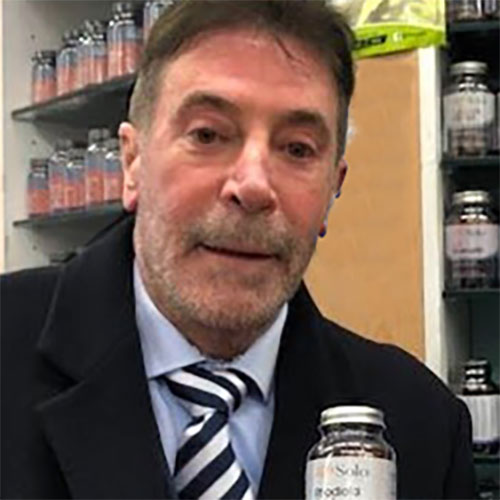
Nigel came into the natural products industry in 1980 working for a small vitamin/herbal company, Power Health, specialising in the food supplement side of the natural products industry. After gaining a number of years’ experience and expertise, Nigel joined Solgar Vitamins as one of their first recruits in 1989. He gained a vast array of knowledge in manufacturing and the production side of the business with Solgar. Nigel was commissioned to start two companies; Vega Nutritionals and Kudos Vitamins. This experience was invaluable when Nigel started Solo Nutrition – quality, purity, never compromised, never equalled.