
The link between nutrition and visible health
Those parts of the body which are visible are often a reflection of the health of the body as a whole, and rely on a wide spectrum of nutrients which work synergistically. Therefore, a constant supply of hair nutrition is essential.
Vitamins for skin health
Vitamin C is needed to form collagen, the “glue” which holds the cells of the skin together (Pullar et al., 2017)
. In fact, collagen makes up 70 per cent of skin, so deficiency will really affect skin quality. For skin that glows with health, you also need a good supply of vitamin E—deficiency can cause dryness and dull, flaky skin (Keen & Hassan, 2016)
. So too can lack of vitamin A—this vitamin is needed to help control the rate of keratin accumulation in skin, and deficiency is linked to dry, rough skin. Antioxidants, such as carotenoids, vitamin C, vitamin E, and zinc, prevent premature ageing and wrinkling of the skin (Poljšak & Dahmane, 2012)
. Carotenoids also provide natural protection against the harmful effects of the sun’s rays (Stahl & Sies, 2012)
.
Nutrients for hair and nails
The cells of hair, skin, and nails are constantly being renewed, and the energy to do so depends on an adequate supply of B vitamins, especially B5 (pantothenic acid) (Huskisson et al., 2007)
. The high silica content of horsetail, a plant native to Britain, brings strength to brittle hair and nails—silica is a component of all connective tissue (Barel et al., 2005)
. Healthy hair and nails rely on a regular supply of amino acids, in particular cysteine, lysine, and methionine. Minerals are also important for hair and nails, and deficiency of some key minerals can even be visible. Ridges on nails can be a sign of iron deficiency, and white flecks on the nails can signify zinc deficiency—also linked to the skin problems eczema and acne (Cashman & Sloan, 2019)
. Another sign of zinc deficiency is poor hair growth (Gupta et al., 2014)
, which is also a sign of insufficient amino acids such as lysine (Rushton, 2002)
.
The importance of water
Finally, the one nutrient which is needed to make all the other nutrients work properly, and which is frequently overlooked, is water—for all these vital nutrients to bring about health and beauty, they need an optimal supply of clean, natural water. The warmer weather means that the body needs an even greater fluid intake.
Solo’s Hair Nutrient Formula
Hair loss is something we at Solo Nutrition take seriously. Our Hair Nutrient formula provides vitamins, minerals, amino acids, fatty acids, and silica (horsetail) to feed your hair and nourish it from the inside. We have developed the ultimate hair, skin, and nail formula. This comprehensive, high-potency, all-in-one formula contains hair- and nail-strengthening vitamins and nutrients.
-

Hair Nutrient Formula
£27.80 Select options This product has multiple variants. The options may be chosen on the product page

References
- Pullar, J.M., Carr, A.C., & Vissers, M.C.M. (2017). The role of vitamin C in skin health. Nutrients, 9(8), 866. doi:10.3390/nu9080866
- Keen, M.A. & Hassan, I. (2016). Vitamin E in dermatology. Indian Dermatology Online Journal, 7(4), 311-315. doi:10.4103/2229-5178.185494
- Poljšak, B. & Dahmane, R. (2012). Free radicals and extrinsic skin aging. Dermatology Research and Practice, 2012, 135206. doi:10.1155/2012/135206
- Stahl, W. & Sies, H. (2012). Carotenoids and protection against solar UV radiation. Skin Pharmacology and Physiology, 25(6), 281-290. doi:10.1159/000337106
- Huskisson, E., Maggini, S., & Ruf, M. (2007). The role of pantothenic acid in human health. Journal of Orthomolecular Medicine, 22(3), 137-144.
- Barel, A., Calomme, M., Timchenko, A., et al. (2005). Effect of oral intake of choline-stabilized orthosilicic acid on skin, nails and hair. Archives of Dermatological Research, 297(4), 147-153. doi:10.1007/s00403-005-0584-6
- Cashman, M.W. & Sloan, S.B. (2019). Nutritional nail disorders. Dermatologic Clinics, 37(2), 205-212. doi:10.1016/j.det.2018.12.002
- Gupta, M., Mahajan, V.K., Mehta, K.S., & Chauhan, P.S. (2014). Zinc therapy in dermatology: A review. Journal of Dermatology and Dermatologic Surgery, 18(2), 85-91. doi:10.1016/j.jdds.2014.03.006
- Rushton, D.H. (2002). Nutritional factors and hair loss. Clinical and Experimental Dermatology, 27(5), 396-404. doi:10.1046/j.1365-2133.2002.04690.x
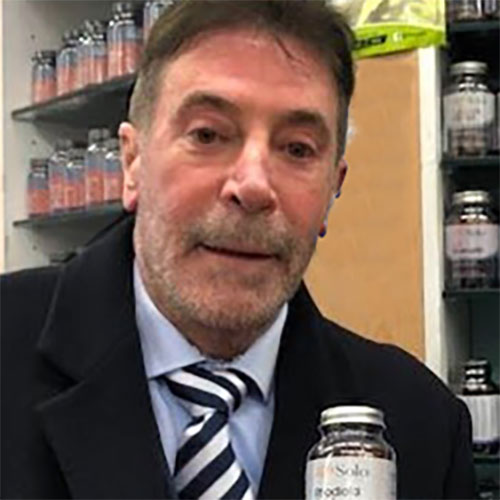
Nigel came into the natural products industry in 1980 working for a small vitamin/herbal company, Power Health, specialising in the food supplement side of the natural products industry. After gaining a number of years’ experience and expertise, Nigel joined Solgar Vitamins as one of their first recruits in 1989. He gained a vast array of knowledge in manufacturing and the production side of the business with Solgar. Nigel was commissioned to start two companies; Vega Nutritionals and Kudos Vitamins. This experience was invaluable when Nigel started Solo Nutrition – quality, purity, never compromised, never equalled.